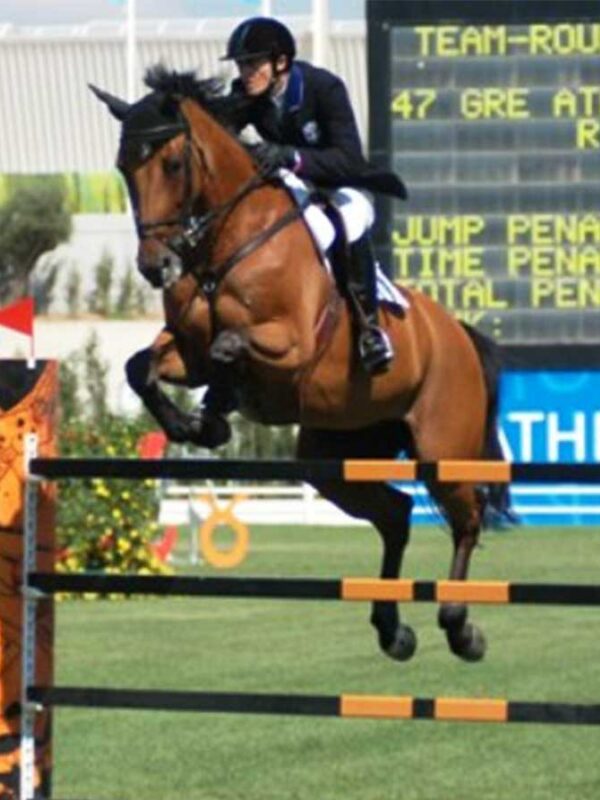
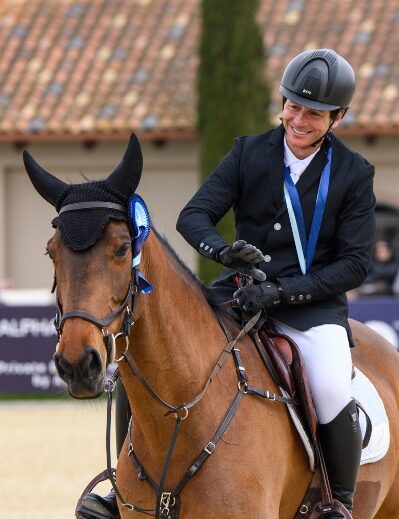
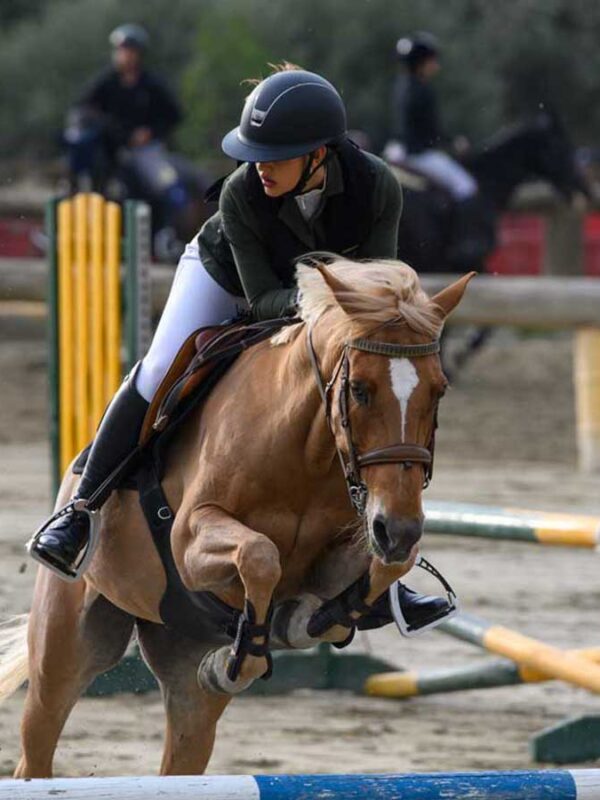
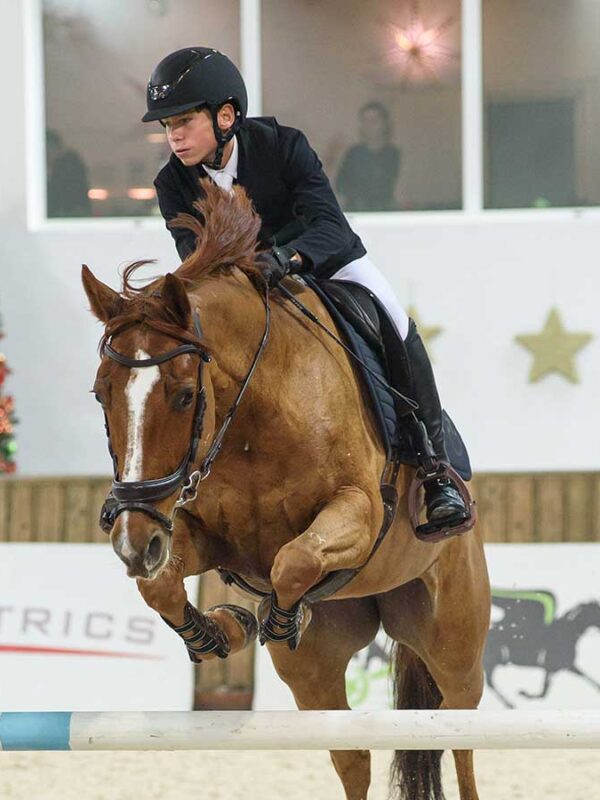
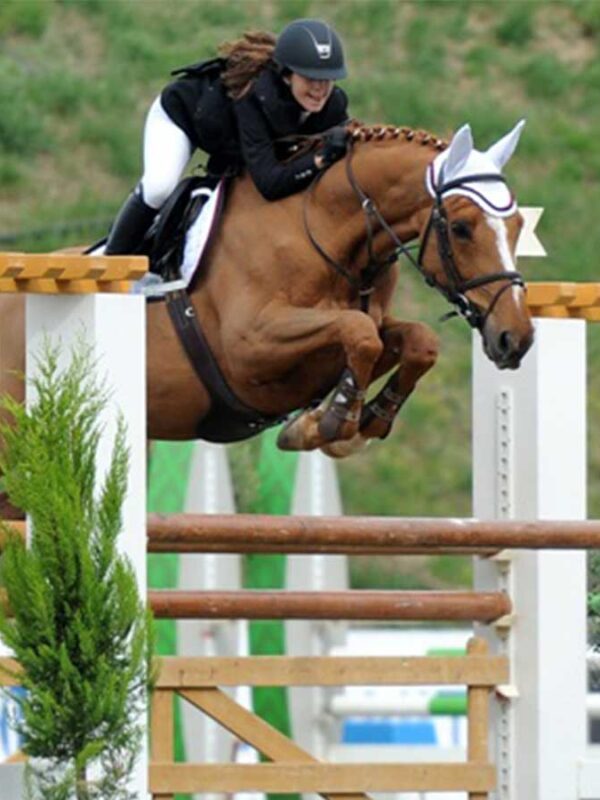
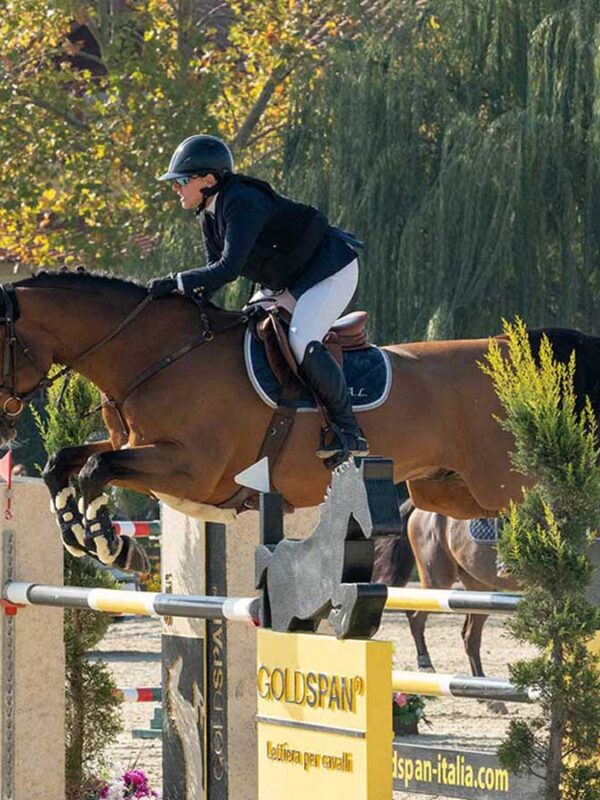
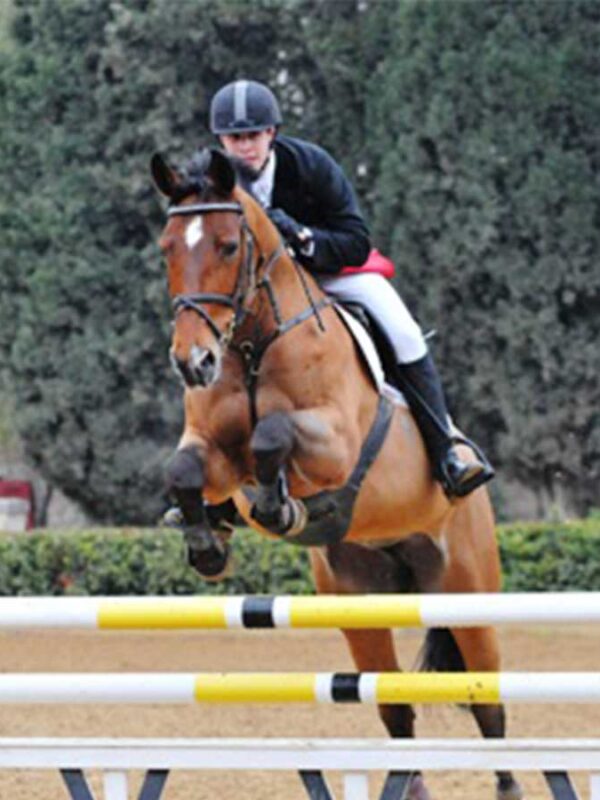
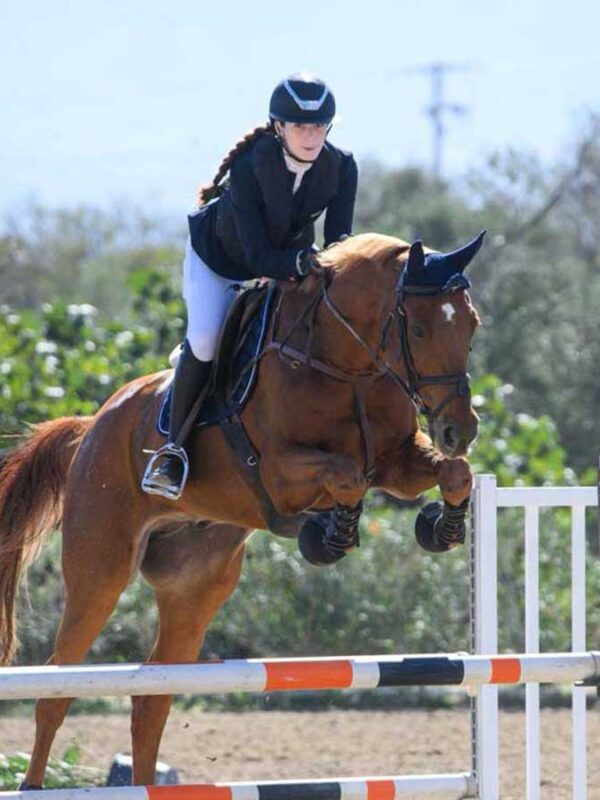
Show Jumping is an equestrian sport in which horse-and-rider pairs complete a course of obstacles, usually set in an arena, within a time limit. The main objective is to complete the course with as few penalties as possible, which are incurred when the horse knocks down an obstacle or refuses to jump
Below are some key points about Show Jumping:
Obstacles: Courses include a variety of obstacles, such as vertical jumps, spreads, and combinations of fences. The obstacles vary in height and width and are often decorated with colorful rails and elements for a more impressive appearance.
Scoring: Riders aim to complete the course within the allotted time, but the main goal is to clear all obstacles without penalties. Penalties are imposed for faults such as knocking down rails, refusing a jump, or exceeding the time limit. The winner is the rider with the fewest penalties.
Classes: Show jumping competitions often include classes for different skill levels, such as beginners, intermediate riders, and professionals or advanced riders. There are also age classes for juniors and adults.
Rider attire: Riders usually wear traditional equestrian attire, such as riding breeches, boots, and a helmet. Appearance must be neat and formal in most competitions.
Types of competitions: Competitions can range from local and regional to international and are governed by organizations such as the International Federation for Equestrian Sports (FEI). At the highest level, Show Jumping has been an Olympic sport since 1900, at the Paris Olympic Games. Initially, only military officers participated. Since 1952, at the Helsinki Olympic Games, participation was also allowed for civilian athletes as well as women.
Horse breeds: Although many breeds can participate, certain ones, such as Thoroughbreds, Warmbloods, and sport horses, are preferred for their athleticism and jumping ability.
Courses: Courses are designed by specialist course designers, who set challenges to assess the agility, precision, and speed of horse and rider. They vary in complexity and may include combinations such as related distances between jumps or curved lines.
Safety: Safety is a top priority. Riders and horses are properly trained, while equipment and the arena surface must meet safety standards in order to reduce the risk of injuries.
Critical evaluation: The evaluation is based on the rider’s performance, the horse’s willingness and ability to jump, as well as the number of penalties incurred. In case of a tie, time is used as a deciding criterion
Awards: Winners receive ribbons, cups, and prizes. In major international competitions, such as the FEI World Cup, substantial prize money is awarded
Show Jumping is an exciting and dynamic sport that highlights the partnership between horse and rider, as well as their physical ability. It is a popular sport for both participants and spectators, requiring skill, training, and a deep bond between horse and rider in order to achieve high performance.